
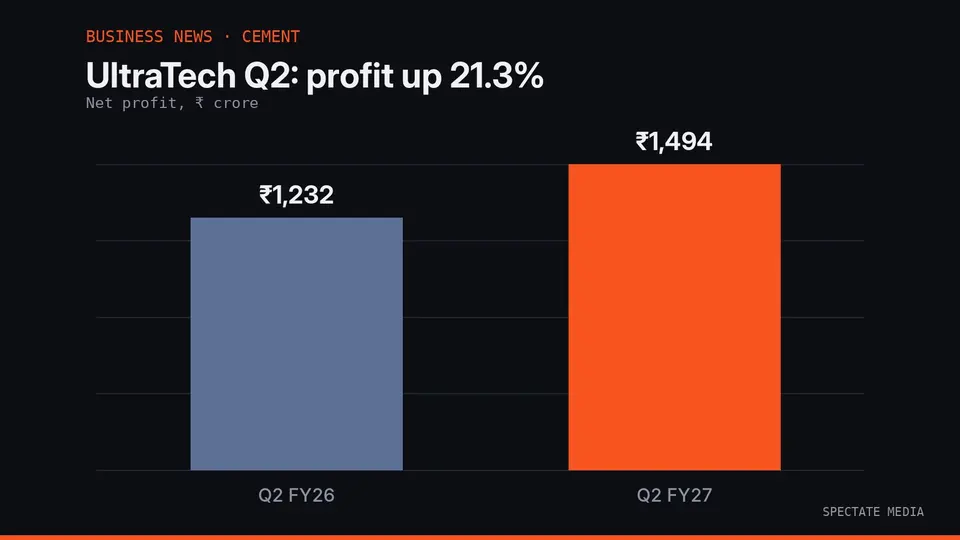
UltraTech Cement reported a 21.3% rise in second-quarter profit, according to a Business Standard report on 21 October 2026. Net profit attributable to owners of the parent was ₹1,493.77 crore for the quarter ended 30 September 2026, against ₹1,231.58 crore a year earlier. The results came on Monday, 19 October.
The numbers
Revenue from operations rose 18.8% to ₹23,295.07 crore from ₹19,606.93 crore. Operating profit (PBIDT) rose 17.3% to ₹3,832 crore from ₹3,268 crore, and its margin on net sales slipped about 23 basis points to 16.6% from 16.9%. Domestic grey cement volumes rose 13.8% to 35.94 million tonnes from 31.58 million tonnes. The report does not give realisation or operating profit per tonne.
What management said
Brokerage notes quoted in the report say management opened its call with cement pricing, not volumes, and cited improving price momentum since mid-September. September exit realisations were 3% above the second-quarter average and spot prices 5% above it, and management said it is confident of raising prices to pass on cost increases. It is targeting a year-on-year improvement in operating profit per tonne in FY27 despite rising fuel costs, helped by pricing, operating leverage and fuel-mix changes.
Costs and expansion
The notes say cost pressure may build in the second half from higher fuel prices linked to the West Asia crisis. UltraTech launched a wires and cables business, Ultravolt, in the quarter, commissioned a facility at Jhagadia in Gujarat and is building a pan-India distribution network. The next phase of organic expansion is to be announced soon. The report puts UltraTech's market share at 31–32%.
Key numbers
- Net profit: ₹1,493.77 crore (Up 21.3% year on year)
- Domestic grey cement volume: 35.94 million tonnes (Up 13.8%)
- Revenue from operations: ₹23,295.07 crore (Up 18.8%)
- PBIDT margin: 16.6% (Down about 23 basis points)
What boards and CFOs should note
Three points stand out. First, volume growth of 13.8% carried the quarter, but margin edged down on costs. Second, management is leaning on price increases to cover fuel inflation. Third, the report says a decline from the previous quarter was mainly due to higher operating costs, so cost control stays in focus.
Source: Business Standard, 21 October 2026. This is a summary of a news report, published as general information. It is not legal, tax or investment advice.
This article is journalism and commentary. It is not a recommendation to buy or sell any security, and it is not professional advice. Read the full disclaimer.