Indian and Norwegian research organisations are exploring technologies that could convert industrial and construction waste into usable materials, with a focus on cement, resource recovery and controlled treatment of hazardous residues.
The Council of Scientific and Industrial Research, Norway’s SINTEF and the Research Council of Norway convened a dialogue in New Delhi on 10 November with regulators and cement and construction companies.
Multiple waste streams are in scope
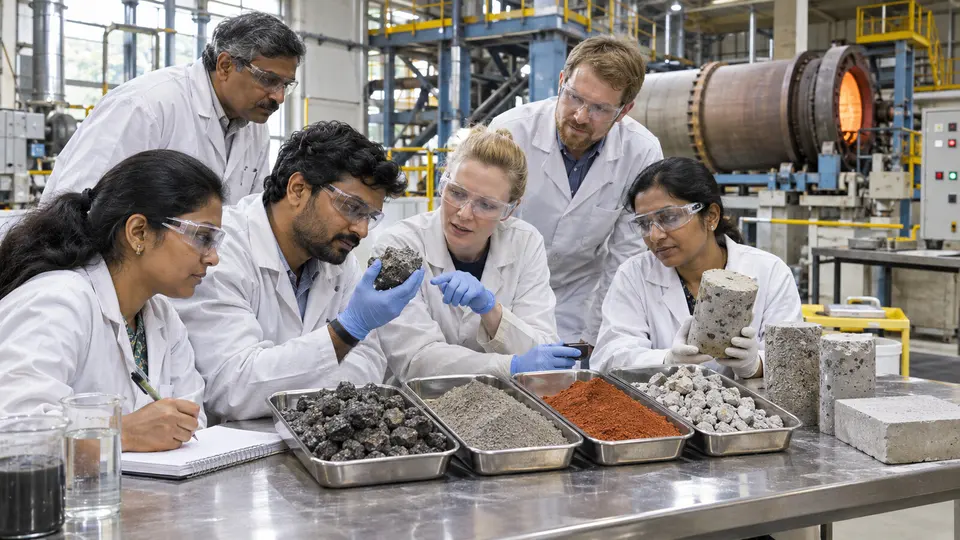
The discussions covered construction and demolition waste, steel slag, fly ash, red mud and other industrial residues. These materials can potentially substitute virgin inputs or become components in cement and concrete, but each stream presents different processing, chemistry and safety requirements.
Participants identified standardisation, economic viability and market acceptance as barriers alongside the underlying technology. A laboratory result is not enough: recycled material must perform consistently, meet building standards and be available at a price that works after collection, sorting and treatment.
The partners also examined cement-kiln co-processing for suitable hazardous wastes, including persistent organic pollutants and materials contaminated with DDT or polychlorinated biphenyls. High-temperature treatment can destroy certain organic contaminants while replacing a portion of conventional fuel, but it requires strict protocols, controlled trials, emissions monitoring and regulatory compliance.
The next stage is industrial validation
The dialogue emphasised joint technology proposals involving CSIR institutes, SINTEF and industry. That structure can connect research capability with operating plants, where variability in waste composition and production conditions becomes visible.
For cement and construction companies, waste-derived inputs can reduce disposal pressure and demand for virgin resources. The business case depends on reliable feedstock, pre-processing cost, product liability and confidence from engineers and buyers.
Regulation also needs to distinguish between genuine resource recovery and the transfer of pollution from one medium to another. Standards for contaminant limits, testing frequency and chain of custody will determine which residues can be used safely.
No project funding, capacity target or implementation timetable was announced. The meaningful checkpoints are named pilot projects, test results, standards accepted by regulators and evidence that products perform at commercial scale.
If those steps follow, the collaboration could open a market for specialised waste processing, quality testing and circular construction materials. Without industrial trials and procurement acceptance, it remains an early research and policy conversation.
Source: Ministry of Science and Technology via PIB, 11 November 2026.
This article is journalism and commentary. It is not a recommendation to buy or sell any security, and it is not professional advice. Read the full disclaimer.