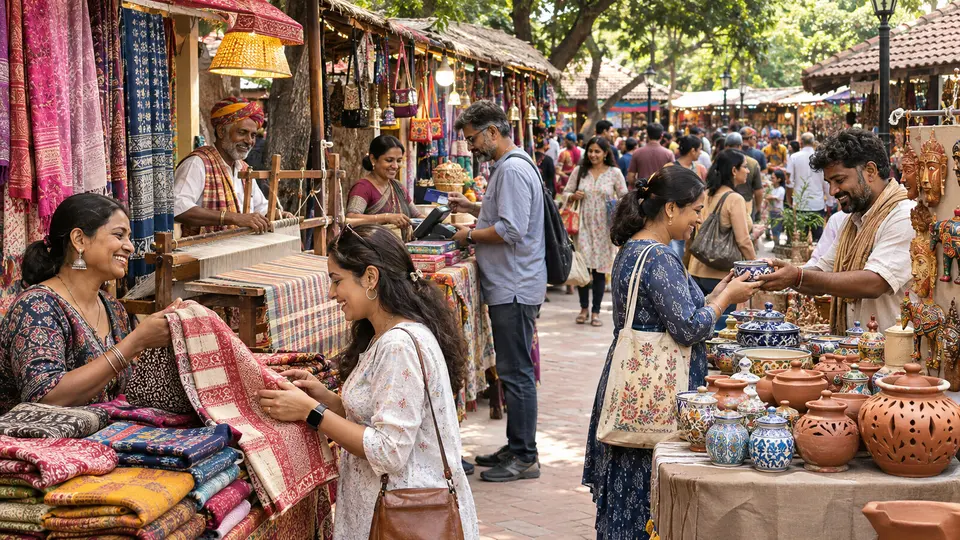
Artisans participating in the Shilp Samagam Mela at Dilli Haat generated cumulative sales of approximately ₹55.46 lakh between 1 and 8 November, according to the Ministry of Social Justice and Empowerment.
The 15-day event runs until 15 November and includes more than 130 stalls across seven thematic zones. Products span handicrafts, handlooms, traditional textiles, food and other indigenous creations.
Sales increased as the event progressed
An earlier ministry update placed cumulative sales at about ₹37.90 lakh for 1–5 November. The latest figure implies roughly ₹17.56 lakh of additional sales over the next three days, although the release does not provide daily transactions, customer counts or sales by product category.
Four public-sector bodies reported the aggregate: the National Scheduled Castes Finance and Development Corporation, National Backward Classes Finance and Development Corporation, National Safai Karamcharis Finance and Development Corporation and National Divyangjan Finance and Development Corporation.
The fair provides market access to artisans and beneficiaries from Scheduled Caste, Other Backward Class and Safai Karamchari communities, as well as persons with disabilities. The ministry covers free stalls, travel, daily allowances and transportation of goods for participating beneficiaries.
Revenue is only one performance measure
The ₹55.46 lakh figure is a direct indicator of demand at the venue, but it is not net income. The release does not disclose inventory costs, margins, public support per participant or how sales are distributed among stalls.
For an artisan enterprise, the larger value of a fair can include wholesale contacts, repeat customers and access to digital channels after the event. The ministry said more than 1,000 artisans have benefited from Shilp Samagam events since 2022, but longitudinal data on repeat orders and income would provide a stronger measure of business durability.
The current sales trajectory suggests active consumer demand for traditional products during the festive period. The final event total, average sales per participating enterprise and the portion converted into later orders will show whether the platform delivers more than a short retail spike.
For policymakers, the useful comparison is between supported market access and the revenue or customer relationships created. For artisans, logistics, working capital, consistent quality and digital discoverability remain essential once the temporary stalls close.
Source: Ministry of Social Justice and Empowerment via PIB, 9 November 2026.
This article is journalism and commentary. It is not a recommendation to buy or sell any security, and it is not professional advice. Read the full disclaimer.