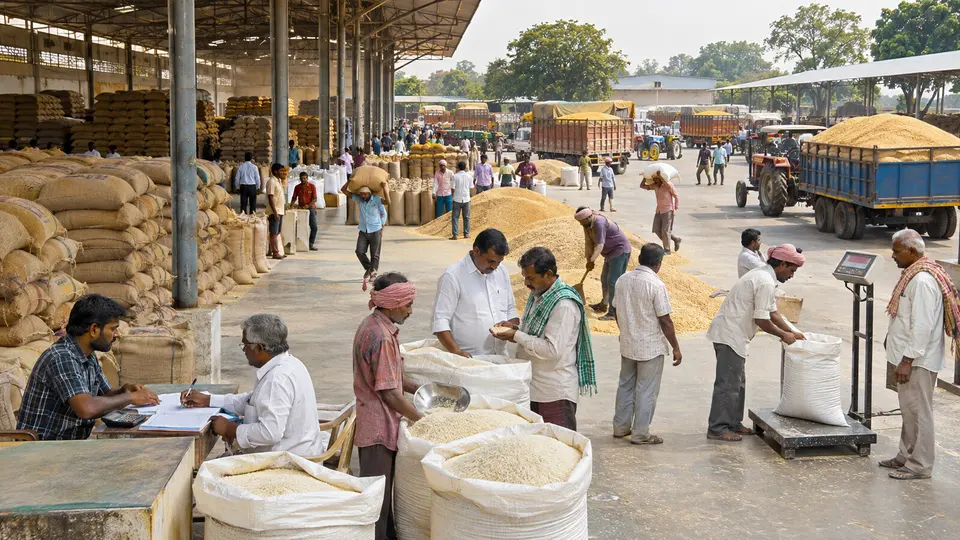
India has doubled its 2026-27 rice sale target under the Open Market Sale Scheme (Domestic) to 50 lakh tonnes from 25 lakh tonnes, expanding public-stock releases intended to support market availability and price stability.
Private buyers had purchased 25 lakh tonnes through e-auctions by 31 October, compared with 11 lakh tonnes in the corresponding period a year earlier. The increase indicates substantially higher use of the channel, though the release does not provide the average auction price or buyer mix.
Weekly stock reporting becomes mandatory
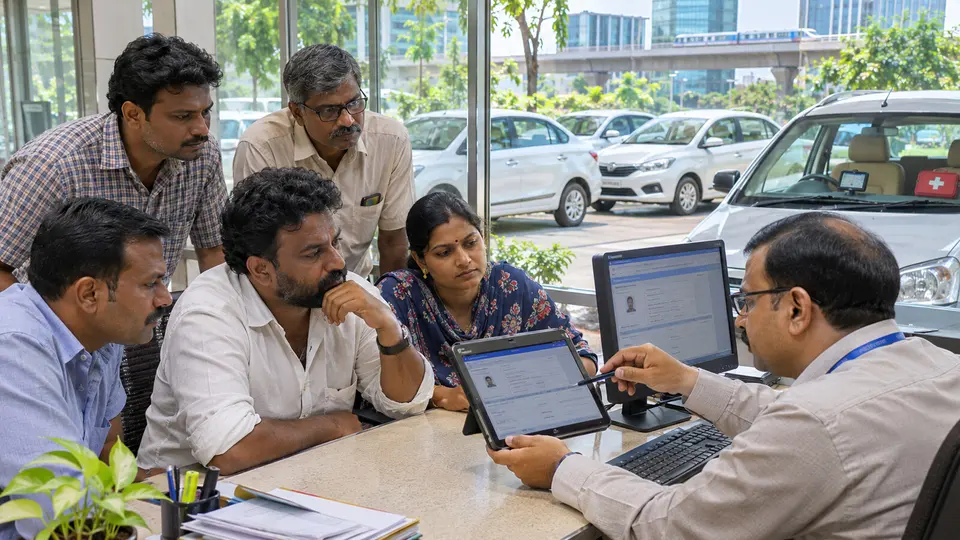
Traders, wholesalers, retailers, large retail chains, processors and millers must disclose rice and paddy stocks every Friday on the Food Stock Portal.
Reporting is required across six categories: basmati rice, non-basmati premium rice, other non-basmati rice, parboiled rice, broken rice and paddy. Entities that fail to register or breach prescribed limits can face action under the Essential Commodities Act.
The disclosure requirement gives authorities a more frequent view of inventories across the supply chain. Its effectiveness will depend on registration coverage, data accuracy and enforcement against non-reporting.
Southern states may impose limits
The Centre has given Andhra Pradesh, Karnataka, Kerala, Tamil Nadu and Telangana concurrence to impose rice and paddy stock limits where necessary. Such limits can remain in force until 31 January 2027.
Stock limits may encourage inventory release, but poorly calibrated restrictions can also affect normal working stocks held by millers, wholesalers and organised retailers. Businesses should monitor each state’s control order rather than assume one national threshold.
Key market numbers
- Revised OMSS rice target: 50 lakh tonnes
- Previous target: 25 lakh tonnes
- Rice sold by 31 October 2026: 25 lakh tonnes
- Comparable prior-year sales: 11 lakh tonnes
- Stock-reporting frequency: every Friday
- Product categories covered: six
- Southern states with concurrence for limits: five
- Stock-limit window: through 31 January 2027
What the rice industry should watch
Auction volumes and reserve prices will influence how public stocks compete with privately held grain. Millers and traders should assess quality specifications, transport costs and regional demand before treating the headline quantity as immediately available supply.
The government is also allocating additional Bharat Rice to NAFED, NCCF and Kendriya Bhandar, particularly for southern markets. Distribution reach and retail offtake will determine how strongly that channel affects local prices.
For food companies and retailers, weekly disclosure adds a recurring compliance process. Inventory systems must classify grain consistently and reconcile physical stocks with portal submissions.
Because the requirement covers several trade channels, companies should also reconcile stocks held at third-party warehouses and goods in transit. Clear cut-off procedures will reduce mismatches between operational records and the quantities reported each Friday.
The measures combine supply release, transparency and potential quantity controls. Their effect should be judged through auction uptake, wholesale prices, retail inflation and reported stocks over the next several weeks.
Source: Ministry of Consumer Affairs, Food and Public Distribution release published by the Press Information Bureau on 6 November 2026.
This article is journalism and commentary. It is not a recommendation to buy or sell any security, and it is not professional advice. Read the full disclaimer.