
India and Indonesia have opened a new round of work on trade barriers and investment opportunities after bilateral trade reached $24.78 billion in 2025-26.
Indonesia accounted for 19.3% of India’s trade with ASEAN and was its second-largest trading partner in the bloc.
Market access spans goods and services
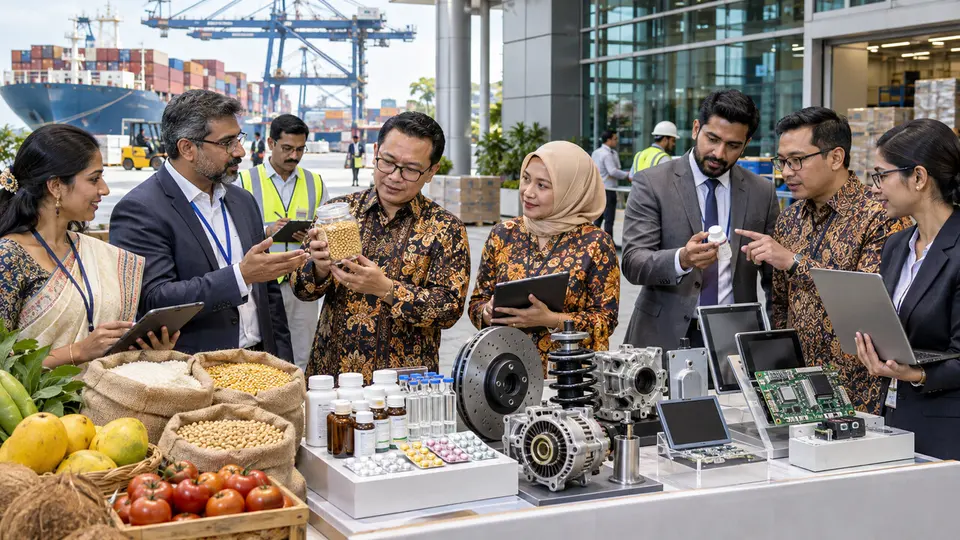
India highlighted export opportunities in pharmaceuticals, vaccines, medical devices, vehicles and components, machinery, dairy, rice, spices, electronics and solar-energy products.
The talks also covered market access for peanuts, horticultural products, buffalo meat and frozen shrimp; approvals for establishments; halal certification; tyre and automobile standards; pharmaceutical registrations; and electronics local-content requirements.
Officials proposed named contact points to pursue time-bound resolution of exporter problems. That procedural step matters because bilateral targets deliver little unless businesses can clear product-specific regulatory and certification barriers.
Services discussions included professional qualifications, mobility, social security, digital services, health, education and tourism. The parties also discussed critical minerals, local-currency settlement, payment-system links, green hydrogen, fertilisers and transport connectivity.
Repeatable access matters more than headline trade
The meeting did not announce a tariff agreement or immediate removal of individual barriers. Commercial outcomes will depend on follow-through by the relevant regulators and counterpart agencies.
For Indian exporters, Indonesia offers scale and proximity, but competition, certification costs and local rules remain material. The useful indicators will be resolved cases, approvals, repeat orders and a more balanced product mix.
Source: Ministry of Commerce and Industry via PIB, 19 November 2026.
This article is journalism and commentary. It is not a recommendation to buy or sell any security, and it is not professional advice. Read the full disclaimer.