
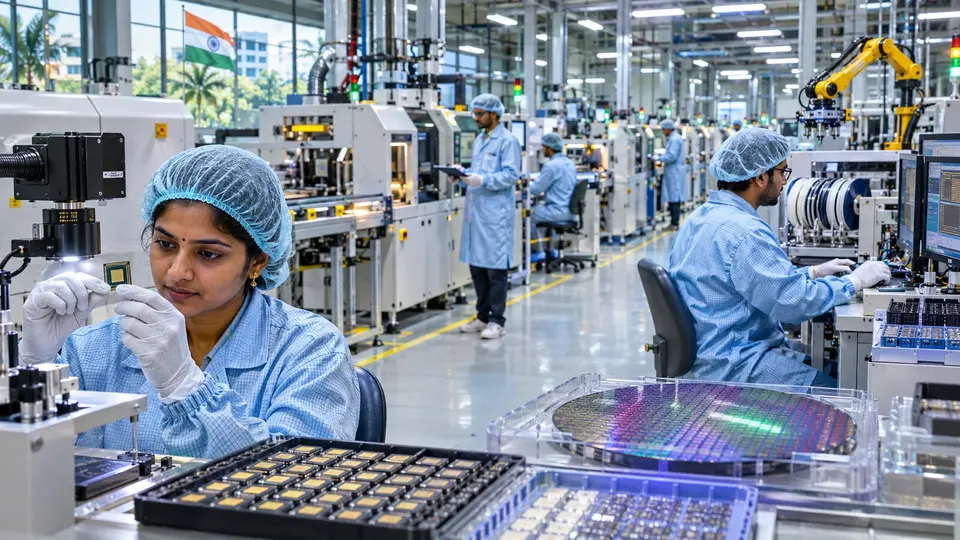
India has approved 12 applicants under the Electronics Components Manufacturing Scheme and launched the Semicon 2.0 web application portal, the Ministry of Electronics and Information Technology said on 6 November.
The decisions aim to push India further into the electronics value chain. Assembly has grown rapidly, but domestic depth in components, materials and specialised production equipment remains the harder industrial-policy challenge.
Why the approvals matter
Component capacity affects the local value added that India can retain as output of phones, computers, telecom equipment and other electronics expands. A deeper supplier base can shorten lead times, reduce exposure to overseas disruptions and improve the economics of final-product manufacturing.
The 12 approvals are therefore better read as supply-chain investments than as isolated factory announcements. Their execution will determine whether India can convert rising electronics output into a broader manufacturing ecosystem.
What to watch next
The key tests are project commissioning, utilisation and the share of domestic sourcing achieved by downstream manufacturers. Investors should also watch whether Semicon 2.0 attracts projects in areas where entry barriers, technical know-how and capital requirements are highest.
Policy approval is the starting point. Commercial production, customer qualification and reliable yields will determine the actual contribution to value addition and import substitution.
Source: Ministry of Electronics and Information Technology via PIB, 6 November 2026.
This article is journalism and commentary. It is not a recommendation to buy or sell any security, and it is not professional advice. Read the full disclaimer.