The 57th GST Council, held in New Delhi on 8 October 2026, approved procedural and structural changes rather than rate changes, according to a Drishti IAS summary of 12 October. GSTN announced the recommendations on 9 October, a TeamLease RegTech report says. Most changes are to take effect from 1 April 2027. The recommendations take effect only through notifications, circulars or amendments to the law.
Penalties and litigation
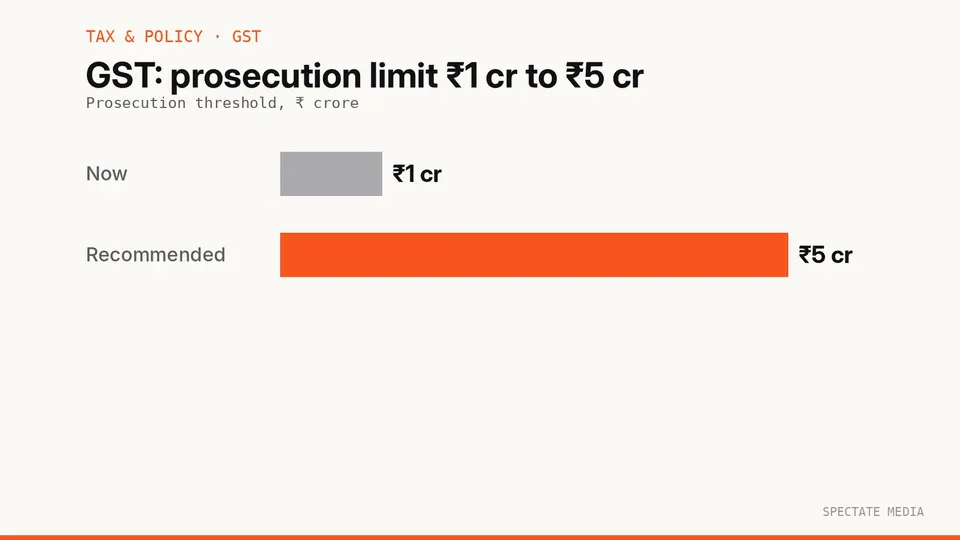
The Council recommended removing arrest powers under GST and raising the prosecution threshold from ₹1 crore to ₹5 crore. TeamLease reports that the maximum general penalty would fall from ₹25,000 to ₹10,000; the Drishti summary gives no penalty figures. No notices would be issued for tax amounts below ₹10,000, and pending notices below that amount would be withdrawn.
Refunds and registration
Refund applications would be acknowledged within 10 days instead of 15. From 1 November 2026, input services become eligible for refunds under the inverted duty structure. The Council also approved clearer rules on documents for registration; 61% of taxpayers now get automatic registration within three working days.
Goods movement, assessment and exports
Only officers of the supplier's State or the destination State could inspect, detain or seize goods in transit, and interception would need specific intelligence and authorisation from a Joint Commissioner-level officer. A faceless assessment framework, modelled on income tax, is to be released for public consultation before Budget 2027, with implementation planned for 2027–28. Some services done in India for foreign clients, such as testing, repair and certification, may qualify as exports.
No rate changes
No rates were changed. Future rate decisions are to be taken once a year and applied from the start of the next financial year.
Key numbers
- Prosecution threshold: ₹5 cr (From ₹1 cr)
- Notices floor: ₹10,000 (None below this amount)
- Refund acknowledgement: 10 days (From 15 days)
- Auto-registration: 61% (Within 3 working days)
What boards and CFOs should note
Three points stand out. First, the 1 November 2026 refund change is the earliest date mentioned. Second, the ₹10,000 notice floor and the higher prosecution threshold change risk for small disputes, but only after notification. Third, annual rate changes would make tax budgeting more predictable.
Source: Drishti IAS, 12 October 2026. This is a summary of a news report, published as general information. It is not legal, tax or investment advice.
This article is journalism and commentary. It is not a recommendation to buy or sell any security, and it is not professional advice. Read the full disclaimer.