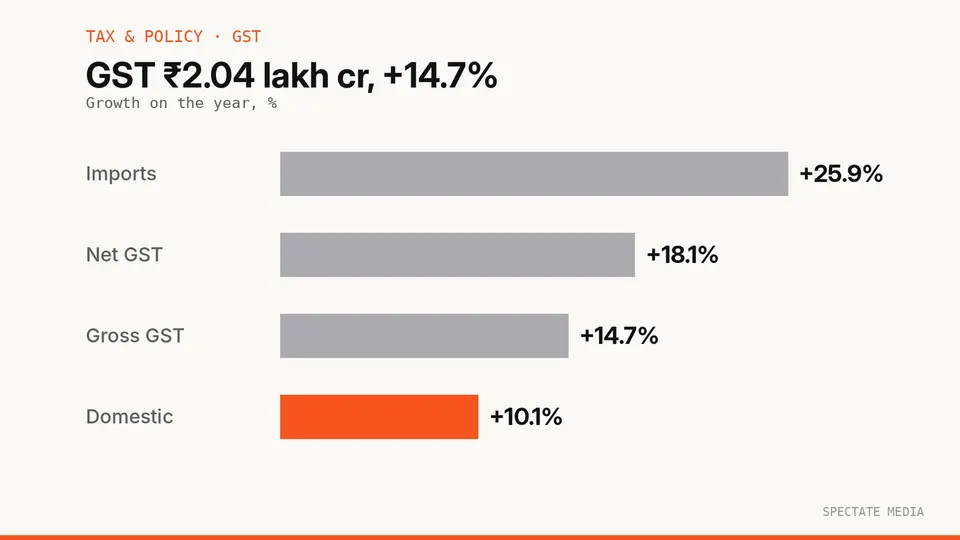
Gross GST collections were ₹2,03,521 crore in September 2026, up 14.7% from a year earlier, according to data released on 1 October and reported by NewsBytes.
Where the growth came from
Domestic collections were ₹1,37,996 crore, up 10.1% from ₹1,25,334 crore. Imports brought in ₹65,525 crore, up 25.9% from ₹52,031 crore, and the report calls imports the largest driver of the monthly growth.
By component, central GST was ₹37,762 crore, state GST ₹45,363 crore and integrated GST ₹1,20,396 crore. Domestic IGST was ₹54,871 crore. The report does not mention cess.
Refunds and net collections
Refunds were ₹27,001 crore, down 3% from ₹27,848 crore. Net GST was ₹1,76,520 crore, up 18.1% from ₹1,49,517 crore.
Half-year
Gross collection for April–September 2026 was ₹12,46,278 crore, up 11.6% on the year.
What this does not say
The report does not explain the import increase, give a sector breakdown, or compare September with August. September 2025, the comparison month, was affected by buyers delaying purchases ahead of the GST rate changes on 22 September 2025, which FADA cites for the auto market. The report does not say whether that also affects the GST base.
Key numbers
- Gross GST: ₹2.04 lakh cr (+14.7% YoY)
- Imports: ₹65,525 cr (+25.9% YoY)
- Domestic: ₹1,37,996 cr (+10.1% YoY)
- Net GST: ₹1.77 lakh cr (+18.1% YoY)
What boards and CFOs should note
Three points stand out. First, imports grew more than twice as fast as domestic collections, so growth leans on imports. Second, net growth of 18.1% is above the gross 14.7% because refunds fell. Third, half-year growth of 11.6% is the steadier figure to plan against than one month.
Source: NewsBytes, 1 October 2026. This is a summary of a news report, published as general information. It is not legal, tax or investment advice.
This article is journalism and commentary. It is not a recommendation to buy or sell any security, and it is not professional advice. Read the full disclaimer.