The Commission for Air Quality Management has invoked Stage III of the Graded Response Action Plan across Delhi-NCR after the capital recorded a daily average Air Quality Index of 382 on 6 November.
The reading was in the “very poor” category. Forecasts from the India Meteorological Department and Indian Institute of Tropical Meteorology indicated that air quality could deteriorate into the “severe” range, prompting the commission’s subcommittee to activate the additional controls.
Stage III adds operational restrictions
Stage III measures apply on top of the actions already required under Stages I and II. Pollution-control boards, the Delhi Pollution Control Committee and other implementing agencies have been instructed to enforce all three layers.
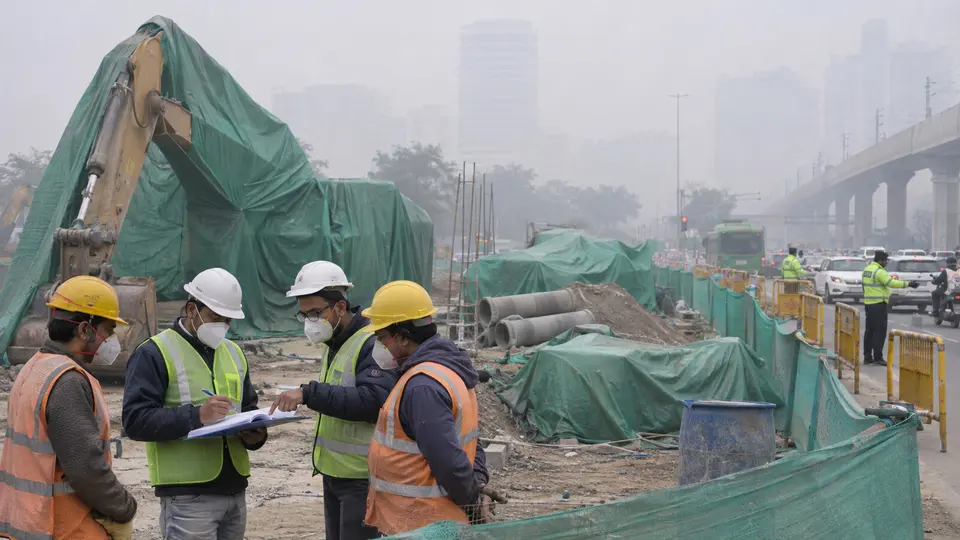
The framework affects businesses through restrictions and controls on construction and demolition activity, transport, industrial fuel use and other identified sources. Companies with projects or operations in the region must check the operative GRAP order rather than rely on a general summary, because exemptions and sector-specific conditions determine whether work may continue.
The commission attributed the deterioration partly to poor dispersion under unfavourable meteorological conditions. That distinction matters: emergency restrictions respond to ambient air quality and forecasts, even when the contribution of an individual site has not changed.
Compliance planning needs to be reversible
GRAP stages can change as conditions improve or worsen. Construction companies, logistics operators, factories and offices therefore need procedures that can be activated quickly, documented and reversed when an official order changes.
The citizen charter accompanying Stage III encourages cleaner transport, fewer short trips, avoidance of coal and wood for heating, and hybrid schooling or work-from-home where instructed. These measures can also affect workforce availability and travel demand.
For businesses, the immediate priorities are confirming which activities are restricted, documenting dust and emissions controls, communicating with contractors and monitoring official CAQM updates. Supply chains should account for possible vehicle restrictions or project delays if air quality worsens.
The economic cost of emergency controls reinforces the value of year-round emissions reduction. But Stage III is an active compliance framework, not a long-term policy target: companies must follow the current order until the commission formally revises or withdraws it.
Source: Commission for Air Quality Management via PIB, 6 November 2026.
This article is journalism and commentary. It is not a recommendation to buy or sell any security, and it is not professional advice. Read the full disclaimer.