Transfer pricing is one of the few tax areas where the paperwork is as much the issue as the price. A note on evidence first. We could not find published data ranking what triggers transfer pricing scrutiny, so we do not state that documentation gaps are the most common trigger. What follows is what changed in the law and where practitioners report files failing.
What changed from 1 April 2026
The Income-tax Act 2025 moved the transfer pricing provisions from sections 92 to 92F of the 1961 Act into sections 161 to 173. Commentary maps section 92D (documentation) to section 171 and section 92E (accountant's report) to section 172. The arm's-length principle, the methods (CUP, RPM, CPM, PSM, TNMM) and the accountant's report obligation carry over.
The Income-tax Rules 2026 were notified on 20 March 2026 and took effect on 1 April 2026. Commentary from KPMG and RSM records these changes:
- Form 48 replaces Form 3CEB, with reporting by associated enterprise across international, deemed international and specified domestic transactions.
- Safe harbour rules are revised, with disclosures in Form 49.
- The advance pricing agreement process is modernised.
- A block transfer pricing assessment is introduced, allowing the same arm's-length treatment to be applied to similar transactions over consecutive years, under conditions.
For FY 2025-26 (assessment year 2026-27), one source notes that Form 3CEB continues under the 1961 Act. Due dates have been the subject of extensions this year, so check the current date with the Income Tax Department rather than relying on a published calendar.
Where files tend to fail
An International Tax Review article by SBC International Tax Practice, sponsored content and so a practitioner view rather than measured data, lists recurring lapses:
- Omitted transactions, such as ESOP recharges, corporate guarantees, interest-free advances and free services.
- Comparables rolled forward from a prior year with no documented search log, or with mismatched fiscal years.
- Values in the accountant's report that do not tie to the related-party note in the audited financials.
- Intercompany agreements dated after the transactions they govern.
- Missing contemporaneous approvals, such as board minutes, and thin functional analysis of risk allocation.
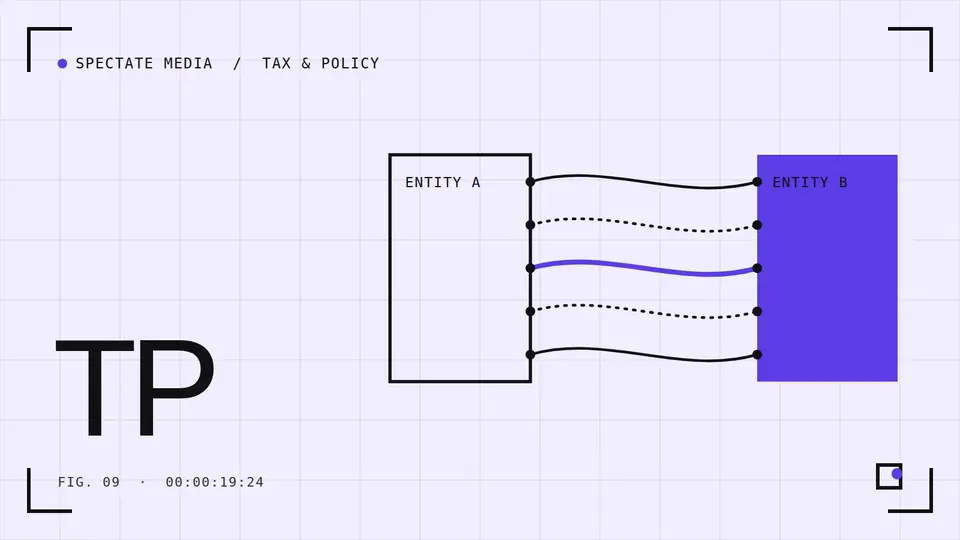
- Mismatched margins between the two sides, for example cost-plus 15% in India against 8% booked abroad, which raises double-taxation exposure.
The article's own conclusion is that failures come more from evidence discipline than from legal interpretation. That is one firm's opinion, and it fits a common-sense reading of how disputes are decided.
The cost of getting it wrong
For FY 2025-26 under the 1961 Act, TAXAJ lists a penalty of Rs 1 lakh for failing to furnish the accountant's report (section 271BA), and 2% of transaction value under sections 271AA and 271G for documentation and information failures. We could not confirm how these map to the 2025 Act, so verify the current equivalents. The larger cost is usually an adjustment, interest and the time to resolve it. Penalties are also a poor guide to exposure, because the same weakness in the file, such as an unreconciled transaction, can affect the benchmarking, the reported margin and the position the company takes in any later dispute or advance pricing discussion.
What to do with this
These are considerations for a finance team, not tax advice.
- Build a complete transaction inventory from the ledgers, not from last year's list. Reconcile it to the related-party note and the accountant's report.
- Match agreements to reality. Check dates, scope and pricing terms against invoices and cash movements.
- Keep the benchmarking file. Retain search logs, filters and rejection reasons, and update financial data annually.
- Record decisions when they are made. Approvals and minutes are far more credible than reconstructions.
- Re-map to the new framework. Update templates and checklists for sections 161 to 173 and Form 48, and confirm any thresholds and timelines in the Rules as of September 2026.
- Consider whether safe harbour, block assessment or an APA suits recurring transactions, with adviser input on eligibility.
- Check the response time for a notice. One source refers to a 30-day window to produce documents. Confirm the current rule and hold the file ready.
- Taxguru on transfer pricing under the Income-tax Act 2025
- KPMG on final Income-tax Rules 2026 and transfer pricing
- RSM India on transfer pricing changes in Income-tax Rules 2026
- Taxguru on Income-tax Rules 2026 (G.S.R. 198(E), 20 March 2026)
- TAXAJ on Form 3CEB applicability and penalties for 2026
- International Tax Review (sponsored) on common Indian transfer pricing lapses
This article is journalism and commentary. It is not a recommendation to buy or sell any security, and it is not professional advice. Read the full disclaimer.