Margin guidance sounds like a number. In practice it is often a sentence built to leave room. This piece sets out five phrases that, in our reading, often mean management has not committed, and what to check next. It is a reading aid based on general patterns, not measured data, and it says nothing about any specific company.
What the record gives you
For a listed company, an earnings call is not a one-off event you have to remember. Under the SEBI Listing Regulations (Regulation 46(2)(oa) and Para A, Part A of Schedule III), the audio or video recording of a post-results call must be made available by the next trading day or within 24 hours of the call ending, whichever is earlier. The transcript follows within five working days. The schedule of group analyst and investor meets is disclosed at least two working days in advance.
Those rules cover group meetings. One-to-one meetings sit outside them. So the useful comparison is between what was said on the call, the presentation, and the numbers filed under Regulation 33. Quarterly results filed there are either audited or subject to a limited review by the auditor, so they are the firmest figures on the record. The call itself is management's account of them, and it is not audited.
One plausible reason guidance is often qualitative: the insider trading regulations expect price-sensitive information to be disclosed publicly before it reaches analysts selectively. Management that has not settled a number has an incentive to keep it loose. That is an inference, not a rule.
Five phrases worth testing
- "Through the cycle" or "over the medium term." No date, no test. Check whether earlier calls used the same words for a horizon that has since passed.
- "Broadly in line with" a prior level. Ask which level, and whether the range was ever stated in numbers. A guide with no number cannot be missed.
- "Subject to input costs" or currency. Every business is exposed to these. What matters is whether management quantified the sensitivity: how many basis points for a given move in a named input.
- "One-off" or "timing related." Track whether the same kind of item appears in consecutive quarters. Repeated one-offs are a pattern, not an exception.
- "We are investing for growth." This may be true. Check whether the spend has a stated size, an end point and a metric that would show it is working.
None of these phrases proves anything on its own. Together, in one call, they suggest the number is not yet firm.
Where to cross-check
Ind AS 108 requires companies applying Ind AS to report a profit measure for each reportable segment, on the basis the chief operating decision maker reviews, and to reconcile segment totals to the financial statements. Segment mix is often where a margin story is confirmed or contradicted.
Useful checks:
- Does the segment that management calls the margin driver actually show the movement in reported segment profit?
- Do the commentary on the call and the notes to the results describe the same cost drivers?
- Has the way the metric is defined changed between quarters? Check the footnotes.
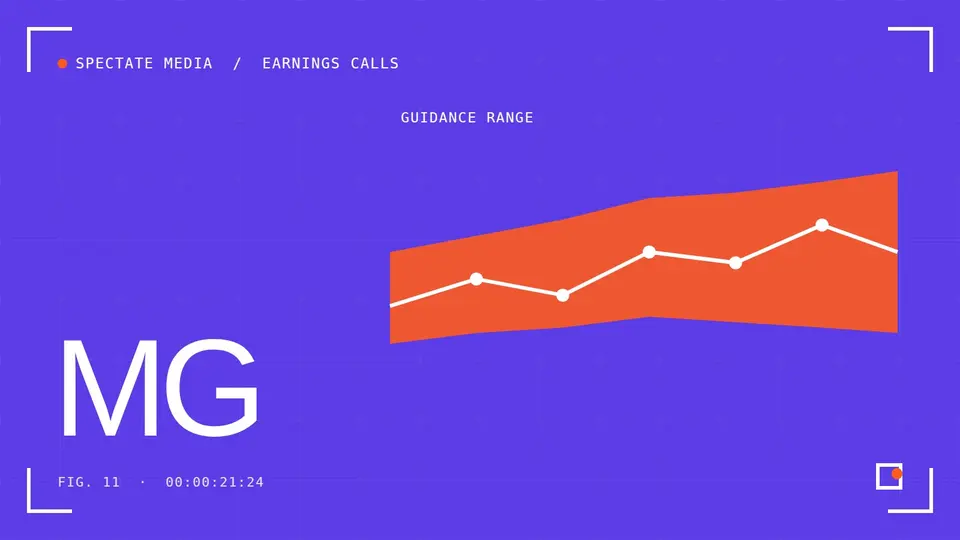
- Is the guidance stated as a range, a floor, a direction or only a tone?
What to do with this
These are considerations for anyone reading guidance, whether as a board member testing management's message, a CFO preparing their own call, or a reader assessing a counterparty. They are not advice on any security.
- Keep a simple log of guidance phrases and the later outcome. Patterns emerge within a few quarters.
- If you prepare calls, decide before the call which figures you can commit to and which you cannot, and say so plainly. A stated range with named assumptions builds more credibility than a soft phrase.
- Read the transcript, not only the summary. Tone is easy to over-read in a recording and hard to audit later.
- Check the current text of the Listing Regulations and any SEBI circulars before relying on the timelines above, as they may have been amended since the sources cited were published.
This article is general information, not legal, tax or investment advice.
This article is journalism and commentary. It is not a recommendation to buy or sell any security, and it is not professional advice. Read the full disclaimer.