Family-owned groups restructure for two recurring reasons: the next generation needs clear ownership, and outside capital asks for a structure it can understand. We have no measured data on how many groups are restructuring now, so this piece does not claim a trend. It explains the tools available in India, what checks apply, and the questions that tend to come first.
Succession: making ownership legible
In India there is no estate or inheritance tax, according to the 2026 Chambers practice guide. Succession is instead managed through wills, private trusts and family settlements. The Income-tax Act, 2025, in force from 1 April 2026, governs the tax treatment of gifts, trust settlements and business transfers. Each has its own conditions. Check the corresponding provisions for a specific structure.
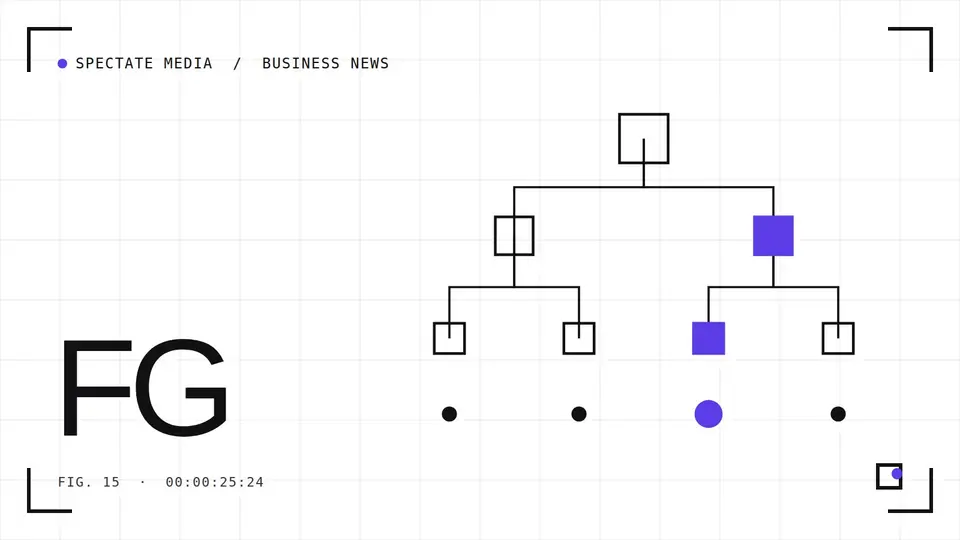
The practical problem is rarely the transfer itself. It is a tangled ownership map: cross-holdings between entities, several branches of the family with different aims, and decisions that depend on one person. Restructuring tends to start by simplifying that map, often through a holding company or by separating businesses between family branches.
The Indian toolkit
Schemes of arrangement. Mergers, demergers and similar reorganisations run through Sections 230 to 232 of the Companies Act before the NCLT. A listed company must obtain a no-objection letter from the stock exchange before filing, under LODR Regulation 37. That letter is valid for six months. Merging a wholly-owned subsidiary into its holding company is excluded.
SEBI's 2021 master circular on schemes adds requirements for listed entities: a registered valuer's report unless shareholding does not change, a fairness opinion from a merchant banker, an audit committee recommendation, and a committee of independent directors confirming the scheme is not detrimental to shareholders. Public shareholder e-voting applies in specified cases. Check the current version of the circular.
Fast-track mergers. The Corporate Laws (Amendment) Bill, 2026 was introduced in the Lok Sabha on 23 March 2026 and referred to a Joint Parliamentary Committee. Business Standard reported on 4 August 2026 that the committee had submitted its report. The Bill proposes lowering a fast-track merger approval threshold from 90% to 75% of shareholding at the meeting, among other changes. As of September 2026, verify whether it has been passed and notified before relying on any of it.
Promoter reclassification. Under LODR Regulation 31A, a promoter can be reclassified as a public shareholder. Conditions include holding no more than 10% of voting rights, having no control or special rights, and having no board seat or key managerial role. Amendments effective 12 December 2024 set a streamlined process: board review within two months, stock exchange no-objection within 30 days, and shareholder approval within 60 days of that. Promoters seeking reclassification cannot vote on it. Family separations can be difficult because family members' holdings are counted together. Check the current regulation.
Capital access: what outsiders read first
Lenders, private investors and IPO advisers read the ownership chart, then the related party notes. Since 1 April 2022, the definition of a related party for listed companies covers the entire promoter group, and since 1 April 2023 it reaches holders of 10% or more. All related party transactions of a listed company need prior audit committee approval, with only independent directors voting. Dealings between group entities are therefore visible and are tested for arm's length terms.
Groups with inter-company loans, shared guarantees or common management may find these are among the first items outside parties ask about. That is a general expectation, not a measured pattern.
What to do with this
These are considerations for promoter families and their boards, not personal advice.
- Draw the current ownership and funding map, including trusts, holding entities and inter-company balances.
- List the decisions that depend on a single person, and note who would decide if that person were unavailable.
- Ask which family members want to stay involved, which want liquidity, and what each would need in a separation.
- Check how related party dealings are priced and documented, and whether that would withstand independent review.
- If a scheme, reclassification or trust transfer is under consideration, have tax and legal advisers confirm the current rules, including the Income-tax Act, 2025 and the Bill's status.
This article is general information, not legal, tax or investment advice.
- Business Standard: Corporate Laws Amendment Bill 2026, what changes (4 August 2026)
- LODR Regulation 37: schemes of arrangement (ca2013.com)
- SEBI master circular on schemes of arrangement, November 2021 (CAclubindia)
- ELP: SEBI LODR amendments of December 2024, including promoter reclassification
- Chambers Practice Guides: Succession and Estate Planning 2026, India
- Beacon Filing: India related party transaction rules
This article is journalism and commentary. It is not a recommendation to buy or sell any security, and it is not professional advice. Read the full disclaimer.